For US Healthcare Professionals


For US Healthcare Professionals
Use the tool below to explore the impacts of each IgG4-RD phenotype.
View this fact sheet to learn more about IgG4-RD.
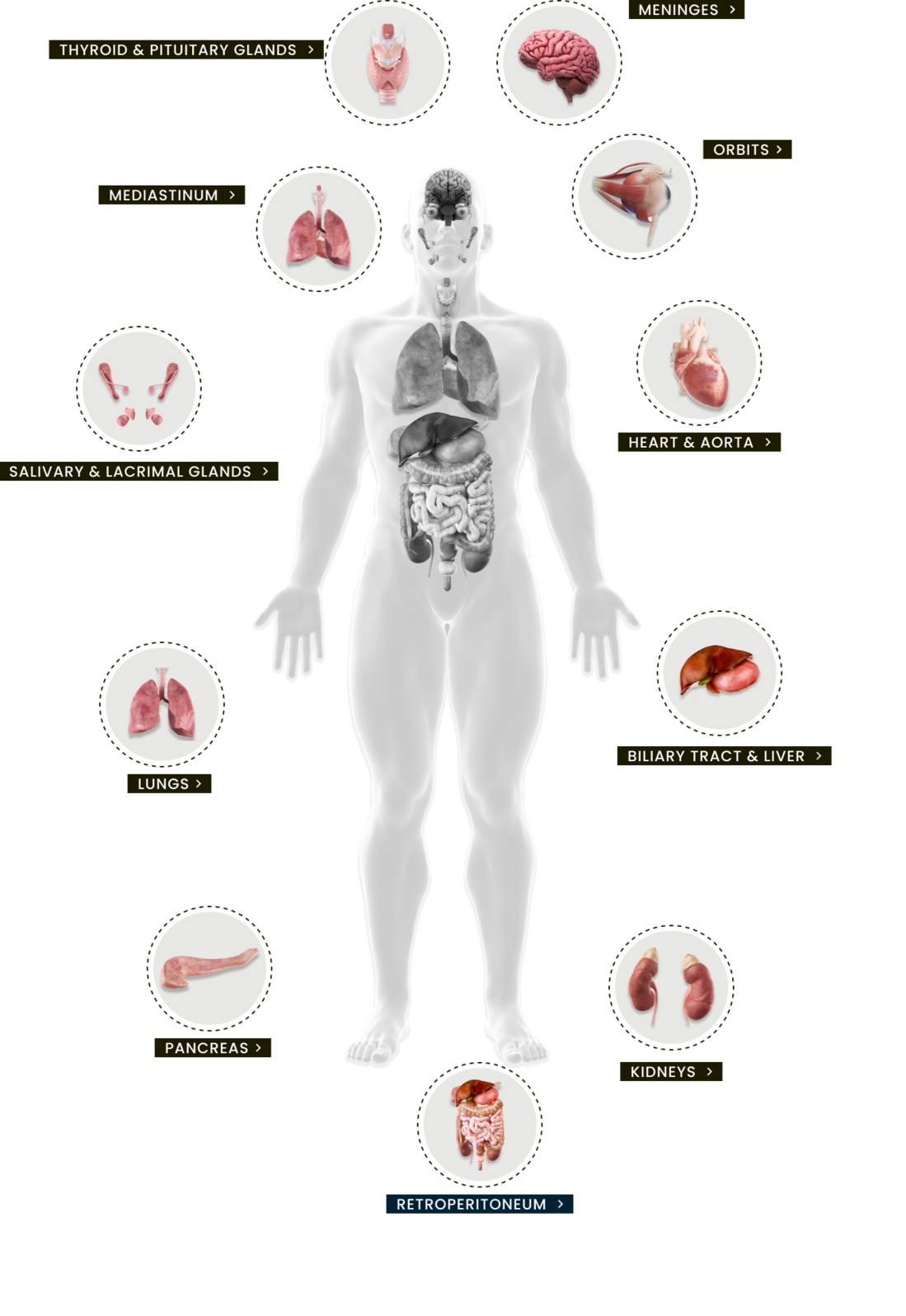
Select a manifestation to learn more
|
Organ(s) |
Frequency |
Systemic Manifestations |
Potential Symptoms |
|---|---|---|---|
|
Pachymeninges |
Infrequent |
|
Cranial nerve palsies |
|
Orbits |
Occasional |
|
Proptosis, vision loss, diplopia |
|
Lacrimal glands |
Frequent |
|
Sicca |
|
Skull bones, sinuses, ears |
Occasional |
|
Chronic sinusitis, midline destructive lesions, anosmia, hearing loss, bone destruction |
|
Salivary glands |
Frequent |
|
Sicca |
|
Heart, aorta |
Infrequent |
|
Coronary artery disease, inflammatory thoracic or abdominal aortic aneurisms |
|
Thyroid |
Infrequent |
|
Hypothyroidism |
|
Mediastinum |
Infrequent |
|
Compression of local structures |
|
Lungs |
Occasional |
|
Pulmonary fibrosis, interstitial lung disease, pleural effusion and thickening |
|
Pancreas |
Frequent |
|
Diabetes mellitus & malabsorption due to exocrine insufficiency |
|
Bile ducts, gallbladder, liver |
Occasional |
|
Biliary stenting, infectious cholangitis, hepatic failure |
|
Kidneys |
Occasional |
|
Renal failure due to interstitial nephritis or glomerulonephritis |
|
Retroperitoneum |
Frequent |
|
Renal atrophy or injury due to hydronephrosis |
|
Organ(s) Pachymeninges Frequency Infrequent Systemic Manifestations
Potential Symptoms and/or Sequelae Cranial nerve palsies |
|
Organ(s) Orbits Frequency Occasional Systemic Manifestations
Potential Symptoms and/or Sequelae Proptosis, vision loss, diplopia |
|
Organ(s) Lacrimal glands Frequency Frequent Systemic Manifestations
Potential Symptoms and/or Sequelae Sicca |
|
Organ(s) Skull bones, sinuses, ears Frequency Occasional Systemic Manifestations
Potential Symptoms and/or Sequelae Chronic sinusitis, midline destructive lesions, anosmia, hearing loss, bone destruction |
|
Organ(s) Salivary glands Frequency Frequent Systemic Manifestations
Potential Symptoms and/or Sequelae Sicca |
|
Organ(s) Heart, aorta Frequency Infrequent Systemic Manifestations
Potential Symptoms and/or Sequelae Coronary artery disease, inflammatory thoracic or abdominal aortic aneurisms |
|
Organ(s) Thyroid Frequency Infrequent Systemic Manifestations
Potential Symptoms and/or Sequelae Hypothyroidism |
|
Organ(s) Mediastinum Frequency Infrequent Systemic Manifestations
Potential Symptoms and/or Sequelae Compression of local structures |
|
Organ(s) Lungs Frequency Occasional Systemic Manifestations
Potential Symptoms and/or Sequelae Pulmonary fibrosis, interstitial lung disease, pleural effusion and thickening |
|
Organ(s) Pancreas Frequency Frequent Systemic Manifestations
Potential Symptoms and/or Sequelae Diabetes mellitus & malabsorption due to exocrine insufficiency |
|
Organ(s) Bile ducts, gallbladder, liver Frequency Occasional Systemic Manifestations
Potential Symptoms and/or Sequelae Biliary stenting, infectious cholangitis, hepatic failure |
|
Organ(s) Kidneys Frequency Occasional Systemic Manifestations
Potential Symptoms and/or Sequelae Renal failure due to interstitial nephritis or glomerulonephritis |
|
Organ(s) Retroperitoneum Frequency Frequent Systemic Manifestations
Potential Symptoms and/or Sequelae Renal atrophy or injury due to hydronephrosis |
IgG4-RD, immunoglobulin G4-related disease.
1. Pinheiro FAG, Pereira IA, de Souza AWS, Giardini HAM, Cordeiro RA. Adv Rheumatol. 2024;64(1):35.
2. Zhang W, Stone JH. Lancet Rheumatol. 2019;1(1):e55-e65.
3. Perugino CA, Stone JH. Nature. 2020;16:702-714.
4. Wallace ZS, Zhang Y, Perugino CA, et al. Ann Rheum Dis. 2019;78(3):406-412.
5. Lanzillotta M, Campochiaro C, Mancuso G, et al. Rheumatology (Oxford). 2020;59(9):2435-2442.
6. Lanzillotta M, Mancuso G, Della-Torre E. BMJ. 2020;369:m1067.
7. Khosroshahi A, Wallace ZS, Crowe JL, et al. Arthritis Rheumatol. 2015;67(7):1688-1699.
8. Legatowicz-Koprowska M. Cent Eur J Immunol. 2018;43(2):204-208.
9. Hess AO, Lobo BC, Leon ME, et al. Laryngoscope Investig Otolaryngol. 2022;7(6):1725-1732.
10. Zhang S, Zhang J, Li Y, Jiao J. J Inflamm Res. 2022:15;4487-4497.
11. Wu S, Wang H. Front Immunol. 2023;14:1278332.
IgG4-RD is a systemic disease with a heterogeneous presentation. Organ involvement and manifestations are highly variable among patients.1-3
Take a closer look at IgG4-RD manifestations through the lens of each phenotype and affected organ systems.
Explore the potential manifestations of each phenotype by making a selection from the list below or clicking through the arrows above.
IgG4-related pancreato-hepatobiliary disease may be characterized by pancreatic, liver, and biliary manifestations.4 A greater incidence of diabetes mellitus compared to other phenotypes is likely due to pancreato-biliary involvement.5 Learn more
IgG4-related retroperitoneal fibrosis and/or aortitis disease often involves manifestations in the retroperitoneum and/or abdominal aorta.4,6 Lymph node involvement can be seen as well.4 Learn more
IgG4-RD of the head and neck may be characterized by lacrimal, submandibular, and lymph node involvement.4 This phenotype may be considered more difficult to treat than others and is associated with a higher rate of disease relapse.5 Learn more
IgG4-related Mikulicz syndrome with systemic involvement is characterized by combined submandibular, parotid, and lacrimal involvement.4 This phenotype presents with a greater average number of affected organs than other phenotypes.4 Mukulicz/systemic involvement might also include organs more typically associated with other IgG4-RD phenotypes.6 Learn more
ORGAN SYSTEMS
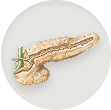
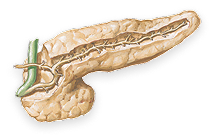
Pancreatic manifestations of IgG4-RD may include diabetes mellitus and pancreatic enlargement.6,7 Additionally, irreversible pancreatic exocrine insufficiency may cause malabsorption resulting in dramatic weight loss.3,6,7
Patients often experience pancreatic failure before diagnosis of IgG4-RD can be established.3
Manifestations
Related organs
ORGAN SYSTEMS
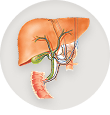
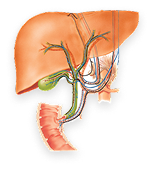
Hepatobiliary manifestations of IgG4-RD may include diffuse biliary wall thickening, biliary stricture, infectious cholangitis, or hepatic failure.3,6
Manifestations
Related organs
ORGAN SYSTEMS
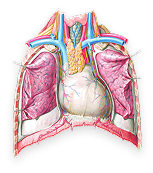
IgG4-RD manifestation in the aorta can cause thickening of the aortic wall that may result in aneurysms.1,6,7 This can potentially lead to coronary artery disease and constrictive pericarditis.1,6,7 Vessel wall inflammation may cause arterial dissections.1,6,7
Manifestations
Related organs
ORGAN SYSTEMS
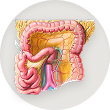
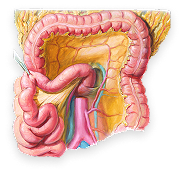
Retroperitoneal manifestations of IgG4-RD may include renal atrophy or injury due to hydronephrosis.6
Retroperitoneal fibrosis associated with IgG4-RD may potentially lead to irreversible nerve damage, abdominal and back pain, difficulty urinating, or renal failure.7,8
The retroperitoneum is among the most frequent sites involved in IgG4-RD.3
Manifestations
Related organs
ORGAN SYSTEMS
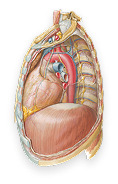
IgG4-RD may cause fibrosing mediastinitis that results in compression of local structures within the mediastinum, including the esophagus, heart, and thoracic aorta, and shortness of breath.1,6
Manifestations
Related organs
ORGAN SYSTEMS
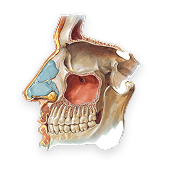
IgG4-RD manifestations in the skull, sinuses, and ears may include midline destructive lesions, anosmia, bone destruction, chronic sinusitis, and hearing loss.6 Sinonasal masses are also possible.9
Manifestations
Related organs
ORGAN SYSTEMS
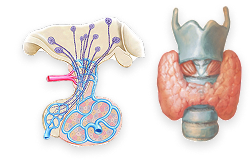
IgG4-RD often presents with organ enlargement resembling tumors.3 Presentation in the thyroid or pituitary gland can result in hypothyroidism or hypopituitarism, respectively.6
Manifestations
Related organs
ORGAN SYSTEMS
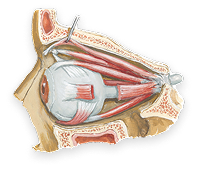
IgG4-RD associated masses and muscle myositis in the eye sockets and orbital area may result in proptosis, diplopia, and eyelid swelling, potentially leading to vision loss.1,6,10
Manifestations
Related organs
ORGAN SYSTEMS
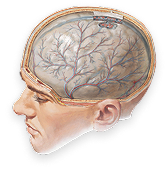
Inflammation caused by IgG4-RD may lead to thickening of the pachymeninges, which can cause cranial nerve palsies, neurologic deficits, and seizures.1,6,7
Manifestations
Related organs
ORGAN SYSTEMS
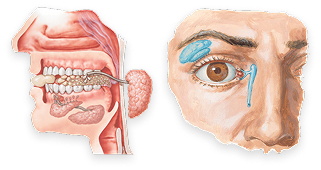
The salivary and lacrimal glands are among the most frequent sites involved in IgG4-RD.3 Manifestations may include sicca or symmetric enlargement of the lacrimal and some major salivary glands (Mikulicz syndrome).3,6,8
Manifestations
Related organs
ORGAN SYSTEMS
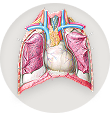
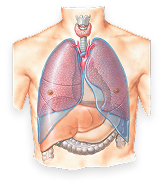
IgG4-RD may lead to pulmonary fibrosis, interstitial lung disease, diffuse thickening of the bronchus, or pleural effusion.3,6,10 Potential masses, nodules, bronchial wall thickening, and inflammation and fibrosis of the lung tissue may result in cough and fatigue.3,6,10
Manifestations
Related organs
ORGAN SYSTEMS
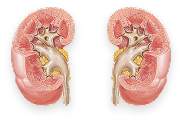
Renal manifestations of IgG4-RD may include tubulointerstitial nephritis, renal failure due to interstitial or glomerulonephritis, potentially irreversible chronic kidney disease, and blood in the urine.1,6,7 Additionally, focal masses, usually multiple, may cause enlargement and blockage of urinary flow.1,3,6,7
Manifestations
Related organs
Phenotypes
IgG4-related pancreato-hepatobiliary disease may be characterized by pancreatic, liver, and biliary manifestations.4 A greater incidence of diabetes mellitus compared to other phenotypes is likely due to pancreato-biliary involvement.5
Commonly affected organs and select possible manifestations
Organ involvement and clinical manifestations of IgG4-RD vary among patients. The organs listed above may not be affected in all patients.1-3
Phenotypes
IgG4-related retroperitoneal fibrosis and/or aortitis disease often involves manifestations in the retroperitoneum and/or abdominal aorta.4,6 Lymph node involvement can be seen as well.4
Commonly affected organs and select possible manifestations
Phenotypes
IgG4-RD of the head and neck may be characterized by lacrimal, submandibular, and lymph node involvement.4 This phenotype may be considered more difficult to treat than others and is associated with a higher rate of disease relapse.5
Commonly affected organs and select possible manifestations
Phenotypes
IgG4-related Mikulicz syndrome with systemic involvement is characterized by combined submandibular, parotid, and lacrimal involvement.4 This phenotype presents with a greater average number of affected organs than other phenotypes.4 Mukulicz/systemic involvement might also include organs more typically associated with other IgG4-RD phenotypes.6
Commonly affected organs and select possible manifestations